
Blog
Conversion Rate Optimization (CRO): 19 Strategies for 2026

Conversion Rate Optimization (CRO): 19 Strategies for 2026

Last Updated:  
August 11, 2026

We think it’s pretty safe to assume you want your business to make as many sales or generate as many leads as you can. Whatever your goal for growth is, you can’t reach it without increasing the number of customers who take that desired action.

This process is known as conversion rate optimization, or CRO. It involves calculating how many of your website visitors take the next step, then implementing various tests and tweaks to your strategy to improve that number.

Here, we’ll explain how to increase conversion rate and share some motivating examples and best practices to improve user engagement and grow revenue.

What is conversion rate optimization (CRO)?

Here’s a common CRO definition: Conversion rate optimization is the process of improving the number of users who take a specific action on your website. These actions you want users to complete are called conversions. A CRO strategy focuses on ways to increase the percentage of your audience that converts by improving their experience with your business.

Why is it important to maximize conversions? It’s not enough to simply get users to your website. You’ve determined you want those users to then take specific actions that are crucial to your business's success. 

When you convert more of your users, you may expand your reach, drive more sales, or acquire new customers, according to Harvard Business School. Ultimately, conversion rate optimization in digital marketing boosts sales and drives profit.

What is a conversion rate?

Let’s back up for a second: Before you can optimize your conversion rate, you need to know what a conversion rate is. And it’s pretty simple: A conversion rate is the percentage of users who complete a specific action on your website. 

That action can look different depending on your business, industry, use case, and other factors. For example, conversions can include signing up for your newsletter, following you on social media, purchasing a product, enrolling in a free trial or info session, adding a product to their cart, purchasing that product, clicking on a specific link, and more.

No matter what conversions and metrics you’re tracking, the concept of conversion rate will always remain the same.

How to calculate conversion rate (formula)

So, how do you calculate conversion rate? There’s a simple conversion rate formula to follow. 

Conversion rate = (total number of conversions / total number of visitors) x 100
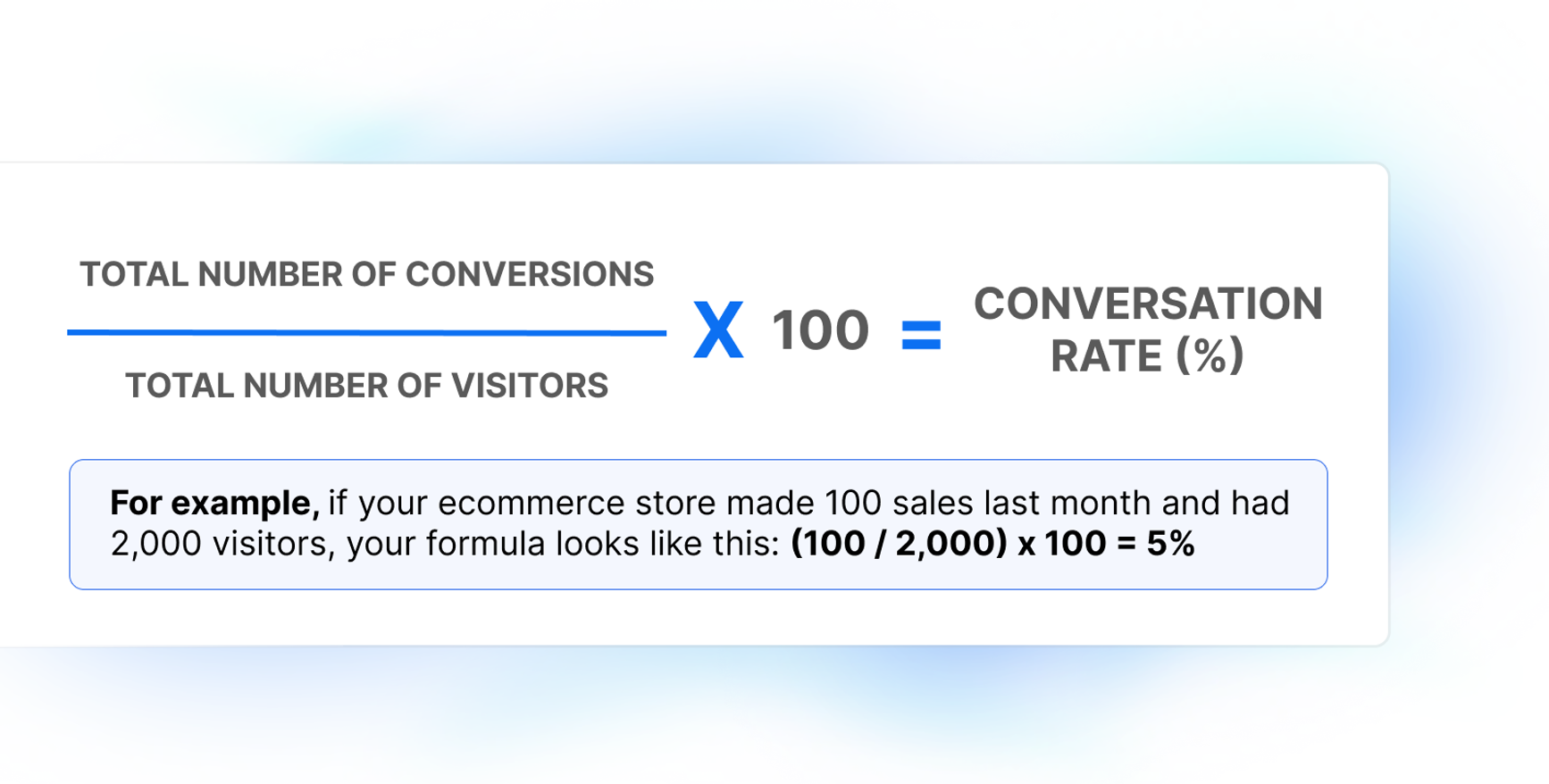
A CRO formula; Total number of conversions divided by total number of visitors x 100

Divide your conversions by your number of users. Multiply this number by 100 to get a percentage.

For example, if your ecommerce store made 100 sales last month and had 2,000 visitors, your formula looks like this:

(100 / 2,000) x 100 = 5%

If, after some ecommerce conversion optimization, you have the same number of visitors but made 120 sales, you will have improved your conversion rate:

(120 / 2,000) x 100 = 6%

What is a good conversion rate?

A rough ballpark for the average conversion rate is somewhere between 2% and 5%. 

But a good conversion rate varies, depending on your industry, audience, and conversion goal.

In fact, that makes comparing conversion rates with other businesses almost meaningless. 

You’re better off focusing on improving your business’s conversion rate than comparing it to anyone else’s. Keep in mind, even small bumps pay off: increasing your conversion rate by just 0.5% can make a meaningful revenue difference.

The best places to start with CRO

The conversion rate optimization process can touch many different aspects of your brand’s website. Here are a few of the highest-impact places to start.

Landing pages

As the entry point for your user, a landing page is designed to convert, so you really want it to be successful. Make sure the most important and enticing information is displayed prominently at the top of your landing pages with clear, eye-catching calls to action (CTAs — more on those below!). 

By tracking your users’ engagement with different aspects of these pages and continuously tweaking them for greater success, you can optimize the performance of your landing pages.

Moby can create a complete, conversion-focused landing page using your brand guidelines, live Shopify product data, reviews, and winning ad creative. Review the draft, then publish under your Shopify domain without editing your theme or changing platforms.

See how Moby builds landing pages
Book a Demo

Product pages

Ecommerce businesses need to actively track metrics to optimize conversion rates on these essential pages, where sales are the top priority.

Consider:

  • Changing out product imagery to highlight your product’s most popular features.
  • Revising product descriptions to share enticing details more concisely.
  • Moving “add to cart” and other purchase buttons higher up or making them stand out more.
  • Simplifying and streamlining busy product pages that don’t make it clear enough to your user what their next action should be.

Blog posts

A content marketing strategy gives you plenty of opportunities to add CTAs to blog posts, thought leadership, and other published content. When you circulate that content widely on various channels, you can convert more new and existing customers.

CRO for blogs usually involves carefully placed and strategically worded calls to action or inline forms that feel organic and natural within the subject matter.

CTAs

Calls to action, or CTAs, take the guesswork out of conversion: They tell your user exactly what you want them to do next.

CTAs are usually links or buttons that prompt a user to add a product to their cart, sign up for your newsletter, get a free sample, or take any other step. Make sure these links and buttons work and work effectively. 

Test and tweak the color, location, and wording of your CTAs to optimize conversion rate.

Homepage

While you likely have less traffic to your homepage than certain high-performing landing pages or even blog posts, your homepage is still a valuable place for CRO.

Like the display window at a brick-and-mortar shop, your homepage gives a user a first impression of your business. It’s also an opportunity to direct them to other pages on your site or even convert them right off the bat. Make sure your headlines, layout, and design encourage visitors through the funnel toward the action you want them to take.

Pricing page

Some users may navigate directly to your pricing page to cut to the chase, so this is another opportunity to optimize the impression you make. You can experiment with how the design of this page affects conversion rate. You may also want to add testimonials, clear information about contacting customer service, and various pricing structures to further entice visitors to convert.

Forms

When asking a user to fill out a contact form or other questionnaire, limit the barriers to them completing that action. Optimize by only including essential questions and ensuring your fields are easy to understand and fill in.

The 19 best CRO strategies 

If you’ve done your own CRO audit and you’re ready to start optimizing some of the pages and functionalities above, here are several helpful CRO strategies to consider.

1. Get to know your customer

It’s essential to understand the needs and behaviors of your users if you want to encourage them to convert. Knowing their pain points, goals, financial situation, and more can help you optimize your conversion funnel. 

You can learn more about who is visiting your site and their perception of your brand through:

  • Surveys
  • Focus groups
  • Social media listening
  • Online forums and communities
  • Customer feedback
  • Market research reports

Use the insights from this type of learning to hypothesize about which of the other strategies below may be most effective among your unique customer base.

2. Analyze your conversion funnel

You should have a clear understanding of your KPIs and a way to track them throughout the customer journey. This way, you can easily identify where users are getting stuck. This kind of funnel analysis can help you eliminate barriers and improve conversion rates.
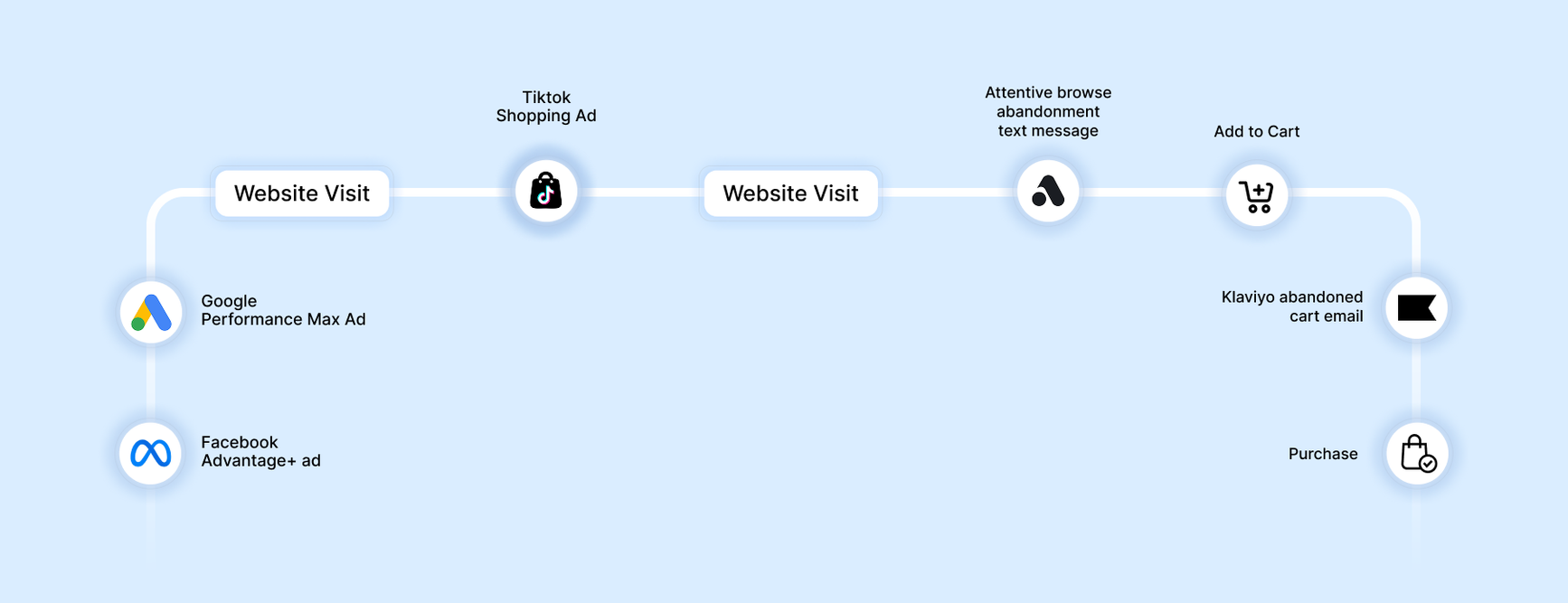
Image showing the conversion funnel of marketing from an ad to website visits, cart abandonment, and purchase

Triple Whale connects on-site behavior to revenue, helping you see which steps in the funnel are losing customers — not just traffic. Then, ask Moby AI to identify the highest-impact drop-off, investigate likely causes, and recommend the next test to run.

3. Use heatmaps, session replays, and other website analytics

Website analytics can help you see where visitors engage, hesitate, and leave. Use each tool for a specific purpose:

  • Heatmaps: See where users click, tap, or hover. Look for high-interest areas without a clear next step and important elements that visitors appear to miss
  • Session replays: Watch how visitors move through a page to identify broken interactions, confusing navigation, and friction around forms or checkout
  • Funnel analytics: Track drop-off between product views, add to cart, checkout, and purchase to identify which stage needs attention
  • Engagement metrics: Use bounce rate, scroll depth, and session duration as diagnostic signals rather than conversion goals on their own

Turn these findings into a clear hypothesis, test one meaningful change, and measure the result. Avoid redesigning an entire page based on a single recording or unusual session.

4. A/B test

A/B testing involves collecting data on two different versions of an element on your website — like a product photo or a landing page headline — to see which one performs better.

Try A/B testing all sorts of pages and features of your site, such as CTA copy and placement, headlines, offers, product images, form questions, homepage imagery, landing page design, and more. The data you gather through this process will help you implement the highest-converting strategy in the short term and inform your creative approach going forward.

5. Troubleshoot your CTAs

A call to action (CTA) tells your visitor what you want them to do next in no uncertain terms. That means it’s really important that the link, form, or button actually works. Test and retest this functionality and closely monitor it for any bugs or issues, or you’ll miss out on conversions.

CTAs should also be written in clear, concise, yet compelling language. CTA wording is a prime area for A/B testing so you can make sure this short-and-sweet messaging is working hard for you.  

You can also A/B test placement, design, and format of your CTAs. Consider in-line, text-based CTAs in your blog content, for example, as your audience may have banner fatigue from pop-ups, CTA buttons, and other visual elements.

6. Improve page load speed

Channel your customer for a moment: How annoyed are you when a webpage you’re trying to make a purchase on simply won’t load? Slow load times increase bounce rate and hurt conversion rate. 

Tools like Google’s Lighthouse can help you quickly assess your website’s load time. Site speed is also a factor Google considers when it comes to search engine ranking, according to Moz, and improving your search engine optimization (SEO) also improves your CRO (more on that below!). Compressing large image files is one straightforward place to start if your site isn’t loading fast enough. (Ideally, pages should load in fewer than 3 seconds!)

7. Improve the mobile experience

Similarly, it’s a problem when a page isn’t set up in a way that’s easy to navigate, read, and shop on a mobile device. Carefully consider how images, text, and CTAs appear on phones and tablets and make the necessary adjustments to improve the user experience.

About two-thirds of online retail purchases occur on mobile devices, according to Statista data. It’s no longer possible to consider the mobile experience as an afterthought if you want to improve conversion rates. If you really want to see success in your ecommerce business, your approach should be mobile-first.

8. Optimize for search engines

Search engine optimization (SEO) increases the likelihood that potential customers find your website when they’re searching online for a solution to a problem. Essential SEO practices, like working specific search keywords into your URL, page title, meta description, and body copy, play a big role in whether a search engine surfaces your brand toward the top of a search results page or lower down, where users are less likely to click on it. 

But so do factors related to CRO practices, like user experience and page load speed. That means CRO and SEO are inextricably intertwined. The best practices of both are ultimately about driving more sales.

9. Include testimonials

Featuring glowing reviews from loyal customers can help build trust and encourage conversions among potential new customers. Consider featuring testimonials or case studies on product or landing pages where they can inspire sales, according to SCORE, a non-profit partner of the U.S. Small Business Administration. This is often a low-cost (if not free) method of conversion rate optimization!

10. Highlight customer ratings and real-time purchases

Similar to testimonials but more streamlined, a simple, prominent customer rating — e.g., 4.9 out of 5 stars on a product page — can also encourage conversions among hesitant customers. CRO tools and platforms can help.

For example, Yotpo can embed these ratings on your pages, and Fomo can bolster social proof by sharing real-time purchases from other users.

11. Use pop-ups

While you don’t want to overdo it on pop-ups, which can turn off some visitors, there’s no denying these tools are eye-catching and effective. Add a pop-up to high-performing pages, or program one to trigger when a user moves to leave your site, per SCORE.

The content can vary, depending on the action you want the user to take. It could highlight a sale, promote a newsletter sign-up, or offer an opportunity to chat with a sales rep.

12. Add video

Embedding a relevant video on a product page or an intro to your brand on your homepage or other landing page is an opportunity to increase engagement, authority, brand awareness, and time on page among your users, according to SCORE. Improvements in all of these areas can, in turn, lead to higher conversion rates.

13. Add a hello bar

These banners, usually displayed across the top of a landing page or homepage, are also called notification bars or welcome bars. They’re typically used to attract a visitor’s attention fast because they appear at the top of the screen. You can use this real estate to announce promotions, sales, and other enticing offers that encourage conversions.

14. Lean on urgency

Welcome bars aren’t the only place you can encourage conversions with deals. Any opportunity you have to promote a limited-time offer is worth exploring. Deals and sales with clear end dates entice customers and may encourage conversions based on a visitor’s desire not to miss out on the opportunity.

15. Make your search function predictive

Imagine a visitor arrives at your website from social media. They saw you offer a product they’re interested in, but it’s not immediately visible to them on your homepage. Naturally, they’ll turn to your search bar.

Make their hunt as seamless as possible with predictive functionality that suggests product results as soon as they start typing a few letters. Ease in finding what they’re looking for keeps users on your site longer and may encourage more conversions. Otherwise, they might get frustrated if they can’t find what they’re looking for and close the tab.

16. Use live chat software

Speaking of avoiding frustration: Considering adding a live chat function to answer users’ questions in real time, especially on high-performing pages. This way, you can encourage and support conversions with stellar customer service exactly where they might otherwise leave the funnel.

17. Make the checkout process smooth

One barrier you might uncover in funnel analysis is issues with checkout. If links don’t work properly, pages load slowly, certain payment methods aren’t accepted, or users can’t easily adjust product quantity, for example, they might leave instead of completing their purchase. Avoiding abandoned carts is part of CRO!

18. Follow up about abandoned carts

That said, it’s highly unlikely you’ll be able to prevent all abandoned carts. But tracking them and following up gives you another opportunity to convert. Create automations that send abandoned cart emails to users who left before converting.

Research from Baralliance suggests that the open rate for abandoned cart emails is close to 50%, and almost 19% of users will convert!

19. Retarget visitors on other platforms

Even if a user didn’t abandon a cart, you still have a chance to recapture their attention after they leave your site. Track users who visit your site, especially your highest-converting pages. Then serve them ads for your products on Facebook, Google, and other platforms as they browse other online sources.

CRO prompts to try with Moby

Moby is Triple Whale’s AI operator for ecommerce. It can use your connected business context to help analyze conversion problems, recommend priorities, and create work, such as Shopify landing pages, while keeping you in control. Use these prompts as starting points and replace the brackets with your page, product, audience, or campaign details.
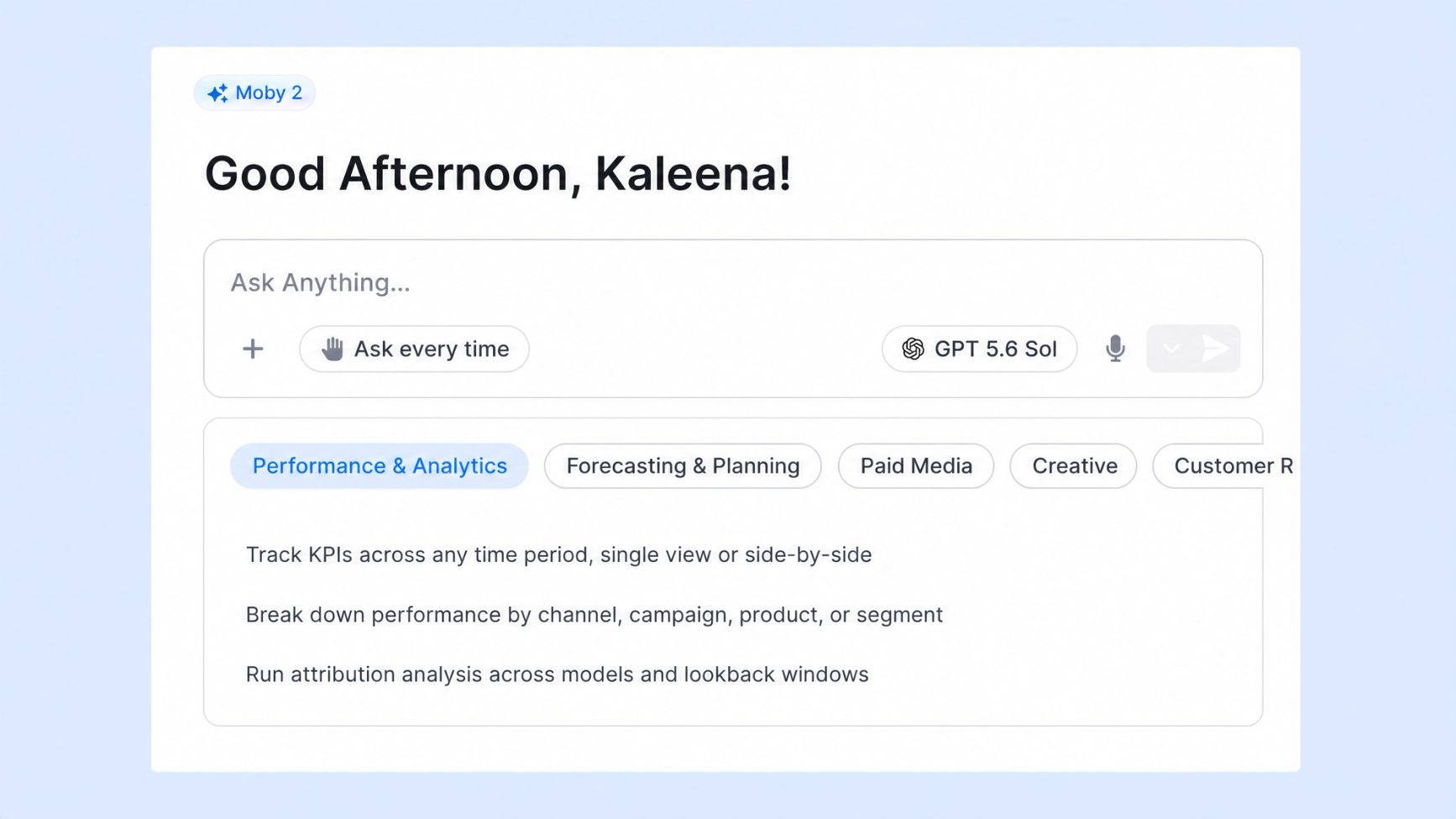
Image showing the interface of Moby by Triple Whale

Prompt 1: Audit a product page

Audit the product page for [product or URL] to identify conversion friction. Review the mobile experience, value proposition, product imagery, social proof, offer clarity, shipping and returns information, and add-to-cart flow. Prioritize the five highest-impact changes, explain the evidence behind each one, and suggest one A/B test to run first.

Prompt 2: Diagnose funnel drop-off

Analyze the conversion funnel for [date range] from product view to add to cart, checkout, and purchase. Break down the results by device and top traffic source. Identify the largest meaningful drop-off, propose three possible causes, and recommend the next data point or test needed to confirm the leading hypothesis.

Prompt 3: Improve ad-to-page message match

Compare the messaging in [campaign or ad set] with the landing page at [URL]. Identify gaps in the offer, audience promise, product benefits, creative, and CTA. Recommend specific edits that create a more consistent path from the ad to the landing page, and separate quick copy fixes from larger page changes.

Prompt 4: Build a Shopify landing page

Create a conversion-focused Shopify landing page for [product or offer] aimed at [audience]. Use our brand guidelines, live product data, customer reviews, and the strongest relevant ad creative. Include a clear hero, product benefits, social proof, objections, frequently asked questions, and a primary CTA. Show me the draft for review before publishing.

Prompt 5: Plan a BFCM CRO test

Review the current BFCM landing page for [offer or collection] and propose a focused CRO test plan. Prioritize the tests by expected impact and effort, define the primary conversion metric and guardrail metrics, and recommend what should be tested before traffic peaks versus what should remain unchanged during the promotion.

Real-world CRO examples

You don’t have to take our word for it, though. These conversion rate optimization examples show just how much your brand can benefit from a little concerted effort.

YSE Beauty

When YSE Beauty’s topline conversion rate appeared to decline, Moby 2 traced the change to a measurement gap rather than weaker site performance. A subscription campaign increased Recharge orders, but those purchases weren't registering as Shopify sessions, which made the reported conversion rate look lower than it actually was. The analysis helped the team avoid optimizing against a misleading signal.

True Classic

True Classic and RealEyes Digital moved a campaign representing about 10% of total ad spend from supervised recommendations to Moby Media Buyer’s autopilot. Within one week, the campaign delivered a 36% higher return on ad spend than manually managed campaigns, and the improvement held.

Hat Club

Hat Club used Triple Whale’s Clicks & Deterministic Views attribution model to capture TikTok view-through purchases that last-click reporting missed. The analysis revealed a 413% lift in TikTok-attributed revenue and a 61% improvement in customer acquisition cost compared with last click, giving the team more confidence to scale high-performing campaigns.

EcoBio Boutique

Triple Whale provided data clarity and accuracy for this Italian beauty company’s expansion into new markets, including visualizations of the customer journey, product purchasing behaviors, and lifetime value data. This dramatically improved conversion rate: EcoBio Boutique saw 55% growth in YoY blended ROAS and 311% increase in YoY net profit.

Miami Heat

The basketball team tapped into Triple Whale’s detailed data analytics to make improvements in their lifecycle marketing funnel approach. This funnel analysis resulted in more conversions among past purchasers, encouraging third, fourth, and even fifth purchases.

CRO best practices

Different strategies above will work better for different businesses and brands. But there are a handful of conversion rate optimization best practices anyone can start with.

  • Research your target customers and understand what drives action. 
  • Remove conversion barriers, from bugs to unnecessary form fields.
  • Keep calls to action clear, concise, and direct.
  • A/B test calls to action, headlines, and other key copy.
  • Optimize your website experience for mobile devices.
  • Improve page load speed across your website.
  • Use CRO and SEO strategies together.
  • Add testimonials, customer ratings, and other social proof.
  • Make it clear what action you want your customers to take next.
  • Try heatmaps, session replays, and website analytics.

Conclusion

Conversion rate optimization helps more website visitors take the actions that matter, from joining an email list to completing a purchase. Start with a clear baseline, identify the biggest source of friction, and test one meaningful change at a time.

Triple Whale connects on-site behavior to revenue so you can see where customers drop off and which improvements matter most. Moby can help you analyze your funnel, prioritize CRO opportunities, and create conversion-focused Shopify landing pages tailored to your business. Book a demo to see what Moby can do for website conversion.

Try Triple Whale Today
Book a Demo

CRO: FAQs

Where are the best places to start with CRO?

High-impact starting points include landing pages, product pages, CTAs, your homepage, pricing pages, and forms. These are the areas where small improvements to copy, design, or functionality tend to have the biggest effect on conversions.

How do you calculate conversion rate?

Use this formula: divide your total number of conversions by your total number of visitors, then multiply by 100. For example, 100 sales out of 2,000 visitors equals a 5% conversion rate.

What are the most effective CRO strategies?

Some of the strongest strategies include A/B testing CTAs and headlines, improving page load speed, optimizing for mobile, adding social proof like testimonials and customer ratings, and following up on abandoned carts with automated emails.

How does SEO relate to CRO?

CRO and SEO are closely connected because factors like page load speed and user experience influence both search rankings and conversion rates. Improving one often improves the other, and the best practices of both ultimately point toward driving more sales.
Component Sales
5.32K
Ecommerce Metrics
Ad Platforms

Conversion Rate Optimization (CRO): 19 Strategies for 2026

Last Updated: 
August 11, 2026

We think it’s pretty safe to assume you want your business to make as many sales or generate as many leads as you can. Whatever your goal for growth is, you can’t reach it without increasing the number of customers who take that desired action.

This process is known as conversion rate optimization, or CRO. It involves calculating how many of your website visitors take the next step, then implementing various tests and tweaks to your strategy to improve that number.

Here, we’ll explain how to increase conversion rate and share some motivating examples and best practices to improve user engagement and grow revenue.

What is conversion rate optimization (CRO)?

Here’s a common CRO definition: Conversion rate optimization is the process of improving the number of users who take a specific action on your website. These actions you want users to complete are called conversions. A CRO strategy focuses on ways to increase the percentage of your audience that converts by improving their experience with your business.

Why is it important to maximize conversions? It’s not enough to simply get users to your website. You’ve determined you want those users to then take specific actions that are crucial to your business's success. 

When you convert more of your users, you may expand your reach, drive more sales, or acquire new customers, according to Harvard Business School. Ultimately, conversion rate optimization in digital marketing boosts sales and drives profit.

What is a conversion rate?

Let’s back up for a second: Before you can optimize your conversion rate, you need to know what a conversion rate is. And it’s pretty simple: A conversion rate is the percentage of users who complete a specific action on your website. 

That action can look different depending on your business, industry, use case, and other factors. For example, conversions can include signing up for your newsletter, following you on social media, purchasing a product, enrolling in a free trial or info session, adding a product to their cart, purchasing that product, clicking on a specific link, and more.

No matter what conversions and metrics you’re tracking, the concept of conversion rate will always remain the same.

How to calculate conversion rate (formula)

So, how do you calculate conversion rate? There’s a simple conversion rate formula to follow. 

Conversion rate = (total number of conversions / total number of visitors) x 100

A CRO formula; Total number of conversions divided by total number of visitors x 100

Divide your conversions by your number of users. Multiply this number by 100 to get a percentage.

For example, if your ecommerce store made 100 sales last month and had 2,000 visitors, your formula looks like this:

(100 / 2,000) x 100 = 5%

If, after some ecommerce conversion optimization, you have the same number of visitors but made 120 sales, you will have improved your conversion rate:

(120 / 2,000) x 100 = 6%

What is a good conversion rate?

A rough ballpark for the average conversion rate is somewhere between 2% and 5%. 

But a good conversion rate varies, depending on your industry, audience, and conversion goal.

In fact, that makes comparing conversion rates with other businesses almost meaningless. 

You’re better off focusing on improving your business’s conversion rate than comparing it to anyone else’s. Keep in mind, even small bumps pay off: increasing your conversion rate by just 0.5% can make a meaningful revenue difference.

The best places to start with CRO

The conversion rate optimization process can touch many different aspects of your brand’s website. Here are a few of the highest-impact places to start.

Landing pages

As the entry point for your user, a landing page is designed to convert, so you really want it to be successful. Make sure the most important and enticing information is displayed prominently at the top of your landing pages with clear, eye-catching calls to action (CTAs — more on those below!). 

By tracking your users’ engagement with different aspects of these pages and continuously tweaking them for greater success, you can optimize the performance of your landing pages.

Moby can create a complete, conversion-focused landing page using your brand guidelines, live Shopify product data, reviews, and winning ad creative. Review the draft, then publish under your Shopify domain without editing your theme or changing platforms.

See how Moby builds landing pages
Book a Demo

Product pages

Ecommerce businesses need to actively track metrics to optimize conversion rates on these essential pages, where sales are the top priority.

Consider:

  • Changing out product imagery to highlight your product’s most popular features.
  • Revising product descriptions to share enticing details more concisely.
  • Moving “add to cart” and other purchase buttons higher up or making them stand out more.
  • Simplifying and streamlining busy product pages that don’t make it clear enough to your user what their next action should be.

Blog posts

A content marketing strategy gives you plenty of opportunities to add CTAs to blog posts, thought leadership, and other published content. When you circulate that content widely on various channels, you can convert more new and existing customers.

CRO for blogs usually involves carefully placed and strategically worded calls to action or inline forms that feel organic and natural within the subject matter.

CTAs

Calls to action, or CTAs, take the guesswork out of conversion: They tell your user exactly what you want them to do next.

CTAs are usually links or buttons that prompt a user to add a product to their cart, sign up for your newsletter, get a free sample, or take any other step. Make sure these links and buttons work and work effectively. 

Test and tweak the color, location, and wording of your CTAs to optimize conversion rate.

Homepage

While you likely have less traffic to your homepage than certain high-performing landing pages or even blog posts, your homepage is still a valuable place for CRO.

Like the display window at a brick-and-mortar shop, your homepage gives a user a first impression of your business. It’s also an opportunity to direct them to other pages on your site or even convert them right off the bat. Make sure your headlines, layout, and design encourage visitors through the funnel toward the action you want them to take.

Pricing page

Some users may navigate directly to your pricing page to cut to the chase, so this is another opportunity to optimize the impression you make. You can experiment with how the design of this page affects conversion rate. You may also want to add testimonials, clear information about contacting customer service, and various pricing structures to further entice visitors to convert.

Forms

When asking a user to fill out a contact form or other questionnaire, limit the barriers to them completing that action. Optimize by only including essential questions and ensuring your fields are easy to understand and fill in.

The 19 best CRO strategies 

If you’ve done your own CRO audit and you’re ready to start optimizing some of the pages and functionalities above, here are several helpful CRO strategies to consider.

1. Get to know your customer

It’s essential to understand the needs and behaviors of your users if you want to encourage them to convert. Knowing their pain points, goals, financial situation, and more can help you optimize your conversion funnel. 

You can learn more about who is visiting your site and their perception of your brand through:

  • Surveys
  • Focus groups
  • Social media listening
  • Online forums and communities
  • Customer feedback
  • Market research reports

Use the insights from this type of learning to hypothesize about which of the other strategies below may be most effective among your unique customer base.

2. Analyze your conversion funnel

You should have a clear understanding of your KPIs and a way to track them throughout the customer journey. This way, you can easily identify where users are getting stuck. This kind of funnel analysis can help you eliminate barriers and improve conversion rates.

Image showing the conversion funnel of marketing from an ad to website visits, cart abandonment, and purchase

Triple Whale connects on-site behavior to revenue, helping you see which steps in the funnel are losing customers — not just traffic. Then, ask Moby AI to identify the highest-impact drop-off, investigate likely causes, and recommend the next test to run.

3. Use heatmaps, session replays, and other website analytics

Website analytics can help you see where visitors engage, hesitate, and leave. Use each tool for a specific purpose:

  • Heatmaps: See where users click, tap, or hover. Look for high-interest areas without a clear next step and important elements that visitors appear to miss
  • Session replays: Watch how visitors move through a page to identify broken interactions, confusing navigation, and friction around forms or checkout
  • Funnel analytics: Track drop-off between product views, add to cart, checkout, and purchase to identify which stage needs attention
  • Engagement metrics: Use bounce rate, scroll depth, and session duration as diagnostic signals rather than conversion goals on their own

Turn these findings into a clear hypothesis, test one meaningful change, and measure the result. Avoid redesigning an entire page based on a single recording or unusual session.

4. A/B test

A/B testing involves collecting data on two different versions of an element on your website — like a product photo or a landing page headline — to see which one performs better.

Try A/B testing all sorts of pages and features of your site, such as CTA copy and placement, headlines, offers, product images, form questions, homepage imagery, landing page design, and more. The data you gather through this process will help you implement the highest-converting strategy in the short term and inform your creative approach going forward.

5. Troubleshoot your CTAs

A call to action (CTA) tells your visitor what you want them to do next in no uncertain terms. That means it’s really important that the link, form, or button actually works. Test and retest this functionality and closely monitor it for any bugs or issues, or you’ll miss out on conversions.

CTAs should also be written in clear, concise, yet compelling language. CTA wording is a prime area for A/B testing so you can make sure this short-and-sweet messaging is working hard for you.  

You can also A/B test placement, design, and format of your CTAs. Consider in-line, text-based CTAs in your blog content, for example, as your audience may have banner fatigue from pop-ups, CTA buttons, and other visual elements.

6. Improve page load speed

Channel your customer for a moment: How annoyed are you when a webpage you’re trying to make a purchase on simply won’t load? Slow load times increase bounce rate and hurt conversion rate. 

Tools like Google’s Lighthouse can help you quickly assess your website’s load time. Site speed is also a factor Google considers when it comes to search engine ranking, according to Moz, and improving your search engine optimization (SEO) also improves your CRO (more on that below!). Compressing large image files is one straightforward place to start if your site isn’t loading fast enough. (Ideally, pages should load in fewer than 3 seconds!)

7. Improve the mobile experience

Similarly, it’s a problem when a page isn’t set up in a way that’s easy to navigate, read, and shop on a mobile device. Carefully consider how images, text, and CTAs appear on phones and tablets and make the necessary adjustments to improve the user experience.

About two-thirds of online retail purchases occur on mobile devices, according to Statista data. It’s no longer possible to consider the mobile experience as an afterthought if you want to improve conversion rates. If you really want to see success in your ecommerce business, your approach should be mobile-first.

8. Optimize for search engines

Search engine optimization (SEO) increases the likelihood that potential customers find your website when they’re searching online for a solution to a problem. Essential SEO practices, like working specific search keywords into your URL, page title, meta description, and body copy, play a big role in whether a search engine surfaces your brand toward the top of a search results page or lower down, where users are less likely to click on it. 

But so do factors related to CRO practices, like user experience and page load speed. That means CRO and SEO are inextricably intertwined. The best practices of both are ultimately about driving more sales.

9. Include testimonials

Featuring glowing reviews from loyal customers can help build trust and encourage conversions among potential new customers. Consider featuring testimonials or case studies on product or landing pages where they can inspire sales, according to SCORE, a non-profit partner of the U.S. Small Business Administration. This is often a low-cost (if not free) method of conversion rate optimization!

10. Highlight customer ratings and real-time purchases

Similar to testimonials but more streamlined, a simple, prominent customer rating — e.g., 4.9 out of 5 stars on a product page — can also encourage conversions among hesitant customers. CRO tools and platforms can help.

For example, Yotpo can embed these ratings on your pages, and Fomo can bolster social proof by sharing real-time purchases from other users.

11. Use pop-ups

While you don’t want to overdo it on pop-ups, which can turn off some visitors, there’s no denying these tools are eye-catching and effective. Add a pop-up to high-performing pages, or program one to trigger when a user moves to leave your site, per SCORE.

The content can vary, depending on the action you want the user to take. It could highlight a sale, promote a newsletter sign-up, or offer an opportunity to chat with a sales rep.

12. Add video

Embedding a relevant video on a product page or an intro to your brand on your homepage or other landing page is an opportunity to increase engagement, authority, brand awareness, and time on page among your users, according to SCORE. Improvements in all of these areas can, in turn, lead to higher conversion rates.

13. Add a hello bar

These banners, usually displayed across the top of a landing page or homepage, are also called notification bars or welcome bars. They’re typically used to attract a visitor’s attention fast because they appear at the top of the screen. You can use this real estate to announce promotions, sales, and other enticing offers that encourage conversions.

14. Lean on urgency

Welcome bars aren’t the only place you can encourage conversions with deals. Any opportunity you have to promote a limited-time offer is worth exploring. Deals and sales with clear end dates entice customers and may encourage conversions based on a visitor’s desire not to miss out on the opportunity.

15. Make your search function predictive

Imagine a visitor arrives at your website from social media. They saw you offer a product they’re interested in, but it’s not immediately visible to them on your homepage. Naturally, they’ll turn to your search bar.

Make their hunt as seamless as possible with predictive functionality that suggests product results as soon as they start typing a few letters. Ease in finding what they’re looking for keeps users on your site longer and may encourage more conversions. Otherwise, they might get frustrated if they can’t find what they’re looking for and close the tab.

16. Use live chat software

Speaking of avoiding frustration: Considering adding a live chat function to answer users’ questions in real time, especially on high-performing pages. This way, you can encourage and support conversions with stellar customer service exactly where they might otherwise leave the funnel.

17. Make the checkout process smooth

One barrier you might uncover in funnel analysis is issues with checkout. If links don’t work properly, pages load slowly, certain payment methods aren’t accepted, or users can’t easily adjust product quantity, for example, they might leave instead of completing their purchase. Avoiding abandoned carts is part of CRO!

18. Follow up about abandoned carts

That said, it’s highly unlikely you’ll be able to prevent all abandoned carts. But tracking them and following up gives you another opportunity to convert. Create automations that send abandoned cart emails to users who left before converting.

Research from Baralliance suggests that the open rate for abandoned cart emails is close to 50%, and almost 19% of users will convert!

19. Retarget visitors on other platforms

Even if a user didn’t abandon a cart, you still have a chance to recapture their attention after they leave your site. Track users who visit your site, especially your highest-converting pages. Then serve them ads for your products on Facebook, Google, and other platforms as they browse other online sources.

CRO prompts to try with Moby

Moby is Triple Whale’s AI operator for ecommerce. It can use your connected business context to help analyze conversion problems, recommend priorities, and create work, such as Shopify landing pages, while keeping you in control. Use these prompts as starting points and replace the brackets with your page, product, audience, or campaign details.

Image showing the interface of Moby by Triple Whale

Prompt 1: Audit a product page

Audit the product page for [product or URL] to identify conversion friction. Review the mobile experience, value proposition, product imagery, social proof, offer clarity, shipping and returns information, and add-to-cart flow. Prioritize the five highest-impact changes, explain the evidence behind each one, and suggest one A/B test to run first.

Prompt 2: Diagnose funnel drop-off

Analyze the conversion funnel for [date range] from product view to add to cart, checkout, and purchase. Break down the results by device and top traffic source. Identify the largest meaningful drop-off, propose three possible causes, and recommend the next data point or test needed to confirm the leading hypothesis.

Prompt 3: Improve ad-to-page message match

Compare the messaging in [campaign or ad set] with the landing page at [URL]. Identify gaps in the offer, audience promise, product benefits, creative, and CTA. Recommend specific edits that create a more consistent path from the ad to the landing page, and separate quick copy fixes from larger page changes.

Prompt 4: Build a Shopify landing page

Create a conversion-focused Shopify landing page for [product or offer] aimed at [audience]. Use our brand guidelines, live product data, customer reviews, and the strongest relevant ad creative. Include a clear hero, product benefits, social proof, objections, frequently asked questions, and a primary CTA. Show me the draft for review before publishing.

Prompt 5: Plan a BFCM CRO test

Review the current BFCM landing page for [offer or collection] and propose a focused CRO test plan. Prioritize the tests by expected impact and effort, define the primary conversion metric and guardrail metrics, and recommend what should be tested before traffic peaks versus what should remain unchanged during the promotion.

Real-world CRO examples

You don’t have to take our word for it, though. These conversion rate optimization examples show just how much your brand can benefit from a little concerted effort.

YSE Beauty

When YSE Beauty’s topline conversion rate appeared to decline, Moby 2 traced the change to a measurement gap rather than weaker site performance. A subscription campaign increased Recharge orders, but those purchases weren't registering as Shopify sessions, which made the reported conversion rate look lower than it actually was. The analysis helped the team avoid optimizing against a misleading signal.

True Classic

True Classic and RealEyes Digital moved a campaign representing about 10% of total ad spend from supervised recommendations to Moby Media Buyer’s autopilot. Within one week, the campaign delivered a 36% higher return on ad spend than manually managed campaigns, and the improvement held.

Hat Club

Hat Club used Triple Whale’s Clicks & Deterministic Views attribution model to capture TikTok view-through purchases that last-click reporting missed. The analysis revealed a 413% lift in TikTok-attributed revenue and a 61% improvement in customer acquisition cost compared with last click, giving the team more confidence to scale high-performing campaigns.

EcoBio Boutique

Triple Whale provided data clarity and accuracy for this Italian beauty company’s expansion into new markets, including visualizations of the customer journey, product purchasing behaviors, and lifetime value data. This dramatically improved conversion rate: EcoBio Boutique saw 55% growth in YoY blended ROAS and 311% increase in YoY net profit.

Miami Heat

The basketball team tapped into Triple Whale’s detailed data analytics to make improvements in their lifecycle marketing funnel approach. This funnel analysis resulted in more conversions among past purchasers, encouraging third, fourth, and even fifth purchases.

CRO best practices

Different strategies above will work better for different businesses and brands. But there are a handful of conversion rate optimization best practices anyone can start with.

  • Research your target customers and understand what drives action. 
  • Remove conversion barriers, from bugs to unnecessary form fields.
  • Keep calls to action clear, concise, and direct.
  • A/B test calls to action, headlines, and other key copy.
  • Optimize your website experience for mobile devices.
  • Improve page load speed across your website.
  • Use CRO and SEO strategies together.
  • Add testimonials, customer ratings, and other social proof.
  • Make it clear what action you want your customers to take next.
  • Try heatmaps, session replays, and website analytics.

Conclusion

Conversion rate optimization helps more website visitors take the actions that matter, from joining an email list to completing a purchase. Start with a clear baseline, identify the biggest source of friction, and test one meaningful change at a time.

Triple Whale connects on-site behavior to revenue so you can see where customers drop off and which improvements matter most. Moby can help you analyze your funnel, prioritize CRO opportunities, and create conversion-focused Shopify landing pages tailored to your business. Book a demo to see what Moby can do for website conversion.

Try Triple Whale Today
Book a Demo

CRO: FAQs

Where are the best places to start with CRO?

High-impact starting points include landing pages, product pages, CTAs, your homepage, pricing pages, and forms. These are the areas where small improvements to copy, design, or functionality tend to have the biggest effect on conversions.

How do you calculate conversion rate?

Use this formula: divide your total number of conversions by your total number of visitors, then multiply by 100. For example, 100 sales out of 2,000 visitors equals a 5% conversion rate.

What are the most effective CRO strategies?

Some of the strongest strategies include A/B testing CTAs and headlines, improving page load speed, optimizing for mobile, adding social proof like testimonials and customer ratings, and following up on abandoned carts with automated emails.

How does SEO relate to CRO?

CRO and SEO are closely connected because factors like page load speed and user experience influence both search rankings and conversion rates. Improving one often improves the other, and the best practices of both ultimately point toward driving more sales.
Jacob Lauing

Jacob Lauing is Triple Whale's Head of Content.

Emily Kordys

Emily is a Content Writer at Triple Whale, where she creates data-driven content for ecommerce marketers. She has spent nearly a decade in content marketing across the B2B SaaS and ecommerce industries, helping brands turn complex topics into engaging, actionable content.

Body Copy: The following benchmarks compare advertising metrics from April 1-17 to the previous period. Considering President Trump first unveiled 
his tariffs on April 2, the timing corresponds with potential changes in advertising behavior among ecommerce brands (though it isn’t necessarily correlated).

Ready to make confident, data-driven decisions faster than ever?

Thank you! Your submission has been received!
Oops! Something went wrong while submitting the form.