Your ad spend went up again this month. Your customer count didn’t move much. Now someone on your team wants to know why.
You’re not alone. Auctions are more competitive than ever, and costs per click (CPC) keep climbing. The old advice to spend more to win more doesn’t work as well as it used to.
Here’s some good news: cost per acquisition (CPA) isn’t fixed. It’s math: ad spend divided by the customers that spend produced. Change the inputs, and the number moves.
This guide shows you how to reduce cost per acquisition, explains what CPA measures, why a lower CPA doesn’t always mean healthy growth, and eight tactics that lower CPA without shrinking your reach.
Key Takeaways
- Cost per acquisition is what you spend to turn a click into a paying customer. You get it by dividing total ad spend by the number of customers those ads brought in.
- Cut waste before you cut budget. Fixing broken tracking, tightening targeting, and matching your ad to your landing pages lowers CPA without shrinking your customer count.
- Get more from customers you already paid for. Raising average order value (AOV) and improving retention can make your CPA look better even if it doesn’t drop.
What is CPA?
Cost per acquisition, or CPA, is the amount you spend to acquire one customer. Here’s how to calculate:
CPA = Total ad spend ÷ New customers acquired
If you spend $10,000 and land 100 new customers, your CPA is $100. Spend that same $10,000 and land only 50, and it jumps to $200. Either side of that equation can move the number, which is exactly why it’s so easy to lower it the wrong way.
Why CPA alone doesn’t tell the whole story
That same $100 could mean two very different things depending on how you got there. CPA tells you what you paid. It doesn't tell you why you paid it, or what happened to your reach along the way.
Two brands can post the exact same $75 CPA and be in different shape: one is growing, while the other is quietly shrinking its own audience to keep that number where it is. That's the blind spot most teams run into when they stare at CPA on its own. The number can fall for a good reason or a bad one, and CPA by itself can't tell you which.
The two ways to bring CPA down
If you want to know how to reduce CPA, you have two main options. The easy way is to cut spend or narrow your targeting down to whatever smaller audience already converts the best. Your CPA drops fast, but so does your total customer count because you’re reaching fewer people.
The harder way is to fix what’s broken: wasted spend, weak tracking, or a clunky checkout. And let the savings show up as a lower CPA without touching how many people you reach. Only the second way protects growth.
8 tactics to lower CPA
These tactics work whether you run ads on Google, Meta, TikTok, or all three. Each one shows how to lower CPA by removing waste or improving efficiency, not by shrinking your reach.
1. Fix your tracking before you touch targeting
You can’t fix a number you can’t trust, and you shouldn’t narrow your audience based on one. Broken or incomplete conversion tracking is one of the most common and least discussed reasons a team ends up cutting the wrong campaign.
Ad blockers, cookie loss, and duplicate pixels all create gaps that undercount or overcount conversions across platforms. Audit your tracking setup monthly, confirm each platform reports the same order count as your store, and remove duplicate tags firing on the same event.
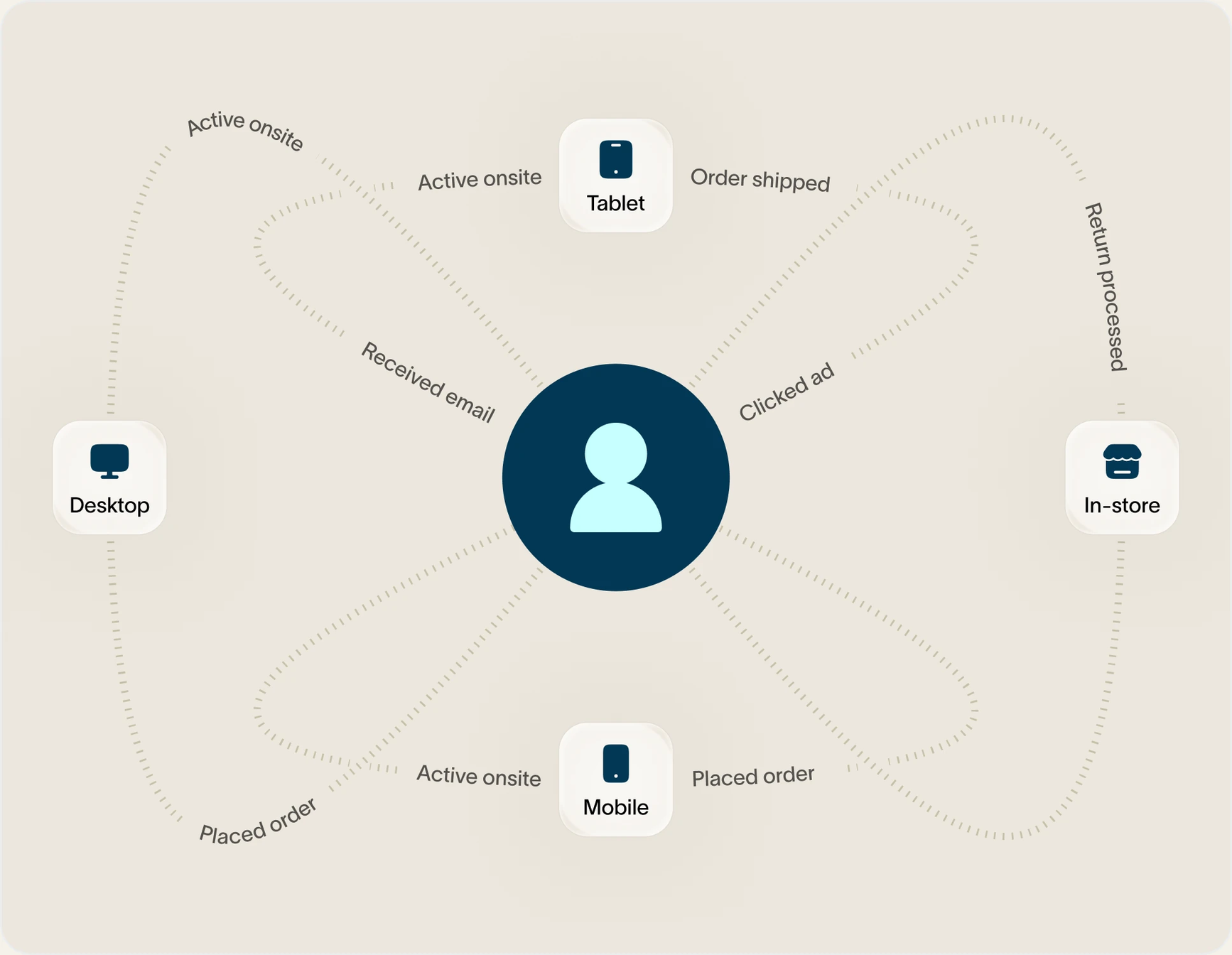
A clean, deduplicated view of every conversion makes sure the campaigns you scale back are the ones underperforming, not just the ones tracking made look bad.
2. Keep testing new audiences, even when your best ones are winning
It’s tempting to pour every dollar into the audience with the lowest CPA. That audience will eventually run out of new people, and if it’s the only thing you’ve been feeding, you’ll have nothing ready to take its place.
Set aside a small, consistent slice of budget, even 10 to 15%, for testing fresh audiences and lookalikes built from your highest lifetime value customers. Most of these tests won’t beat your current CPA right away. The ones that do become your next source of growth once your top audience saturates.
And if you want to reduce CPA on Facebook ads, keep each test audience in its own ad set. That way, a weak test can’t drag down the CPA of an audience that’s already winning.
3. Match your ad, keyword, and landing page
Google calls this Quality Score. Meta calls it relevance. Every platform rewards ads that feel consistent from click to purchase and charges more for the ones that don’t, pushing teams to narrow their audience just to keep costs down.
Fix the mismatch instead of the audience. Make the offer in your ad the first thing a visitor sees on the landing page, and test one variable at a time, such as the headline, image, or call to action, so you know exactly what moved the number. A better match lowers your cost per click for the same reach, not a smaller one.
On Google, that means tight keyword groups, ad copy that repeats the keyword, and a matching landing page for each ad group. That’s how you reduce CPA on Google Ads without cutting reach.
4. Use retargeting, but don’t let it replace new-customer spend
Retargeting ads convert well because they reach people who already know your brand. That makes it tempting to shift budget away from top-of-funnel spend and lean on retargeting instead, since it drags your blended CPA down fast.
But that’s only a short-term fix with a long-term cost. Retargeting only works on people your top-of-funnel campaigns already brought in, so starving those campaigns eventually starves your retargeting pool too.
Cap frequency so you’re not overpaying to show the same ad to the same person all week, and check attribution across touchpoints to confirm retargeting is driving new revenue, not just claiming credit for sales that would have happened anyway.
5. Remove friction from your landing page and checkout
This is the cleanest way to lower CPA without touching your audience at all. Every visitor who abandons a slow or confusing page is a customer you already paid to reach and didn’t convert, and fixing the page wins that customer back without spending another dollar on reach.
Audit page load speed, mobile layout, and checkout steps first, since those three cause more lost sales than weak ad copy ever does. Test one change at a time, like a shorter checkout form or a clearer shipping cost, and measure the lift before moving to the next test.
6. Raise your average order value
You can lower your effective CPA without spending less or reaching fewer people, just by getting each customer to spend more per order. This is one of the few CPA levers that has zero downside for growth.
Add product bundles, a free shipping threshold just above your current average order value (AOV), or post-purchase upsells at checkout. Track AOV trends by channel and product in one dashboard, so you can see exactly which offers are lifting order size.
7. Let your LTV set your CPA target
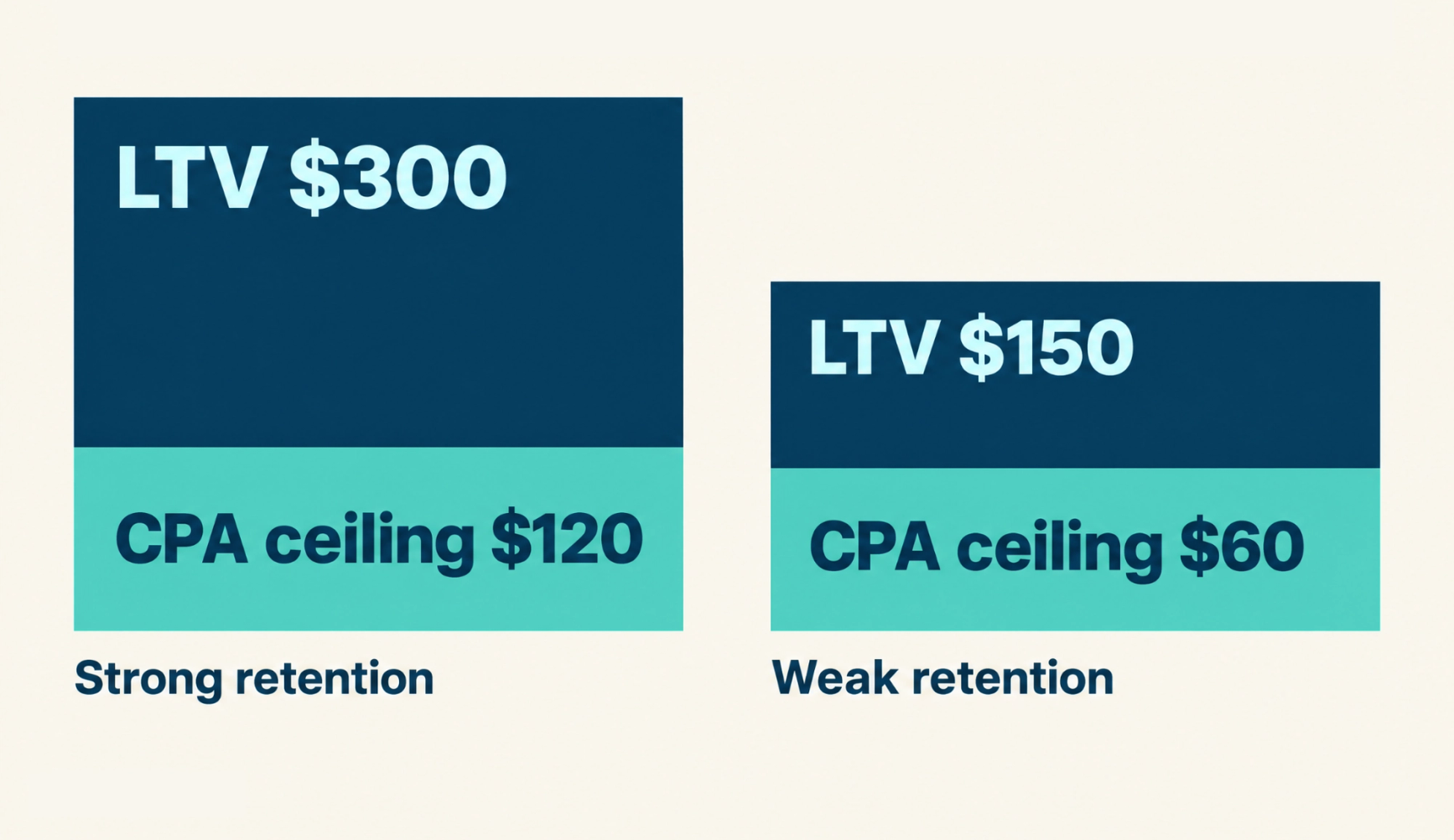
New customer acquisition will always cost more than keeping an existing customer around. A brand with stronger retention can afford a higher CPA and still come out ahead, which means chasing the lowest possible CPA can actually cost you growth.
Lifetime value, or LTV, is the total revenue a customer generates over their full relationship with your brand. Compare LTV by acquisition channel, and set your target CPA based on that number instead of an arbitrary “lower is better” rule. A channel with strong LTV deserves a higher CPA ceiling, since it can afford to spend more and keep growing.
8. Review performance daily and reinvest in what’s working
A campaign can waste a full month of budget before a slow reporting cycle even flags the problem, and a team that only checks monthly usually reacts by cutting broadly instead of fixing precisely.
Set a short, recurring review, even fifteen minutes a day, to check CPA and customer count side by side by campaign. When you find waste, cut it and reinvest that budget into the campaigns and audiences already growing efficiently. Catching a spike early and understanding what caused it keeps you from cutting the first campaign that just looks expensive.
How Triple Whale can help you reduce CPA
Every tactic above depends on knowing whether a lower CPA came from cutting waste or cutting reach. That’s the problem Triple Whale was built to solve.
Triple Whale pulls your store, ad platform, and pixel data into one source of truth. So you can see blended CPA, new customer count, and LTV side by side, using your actual costs, instead of the platform-reported numbers that make every channel look more efficient than it really is.
When CPA moves, you don’t have to guess why. Moby, Triple Whale’s AI teammate, can tell you whether a drop came from real efficiency gains or a shrinking audience, and flag it before a “good” number turns into a stalled growth trend.
Want to see how Triple Whale and Moby can help you reduce CPA? Book a demo or get started for free.
How to reduce CPA FAQs
Will lowering my CPA always hurt my growth?
No. It only hurts growth when the CPA drop comes from narrowing your audience or cutting the spend that brings in new customers. A CPA drop from fixing tracking, improving your landing page, or raising average order value doesn't cost you any reach.
What's the fastest way to lower CPA without cutting volume?
Fix your conversion tracking and your landing page first. Both lower CPA by converting more of the traffic you're already paying for, instead of reducing how much traffic you buy.
How do I know if a CPA drop is healthy or a warning sign?
Compare it against your total new customer count over the same period. A falling CPA with a flat or growing customer count is healthy. A falling CPA with a shrinking customer count means you're paying less because you're reaching fewer people, not because you got more efficient.
How can I reduce CPA using retargeting?
Use retargeting to supplement new-customer ads. It converts well because it reaches people who already know your brand, so it quickly pulls your blended CPA down. But it only works on people your top-of-funnel campaigns already brought in. Keep funding those campaigns, cap frequency so you don't overpay to show the same ad to the same person, and check attribution across touchpoints to confirm retargeting is driving new revenue.