


Marketing Mix Modeling
Stop planning budgets in the dark.
Eliminate the guesswork of budget planning with MMM that quantifies incremental revenue by channel and delivers performance-informed recommendations for smarter budget decisions every week.
For more information on how we process your personal information and what rights you have in this respect, please see our Privacy Policy.
Designed for commerce
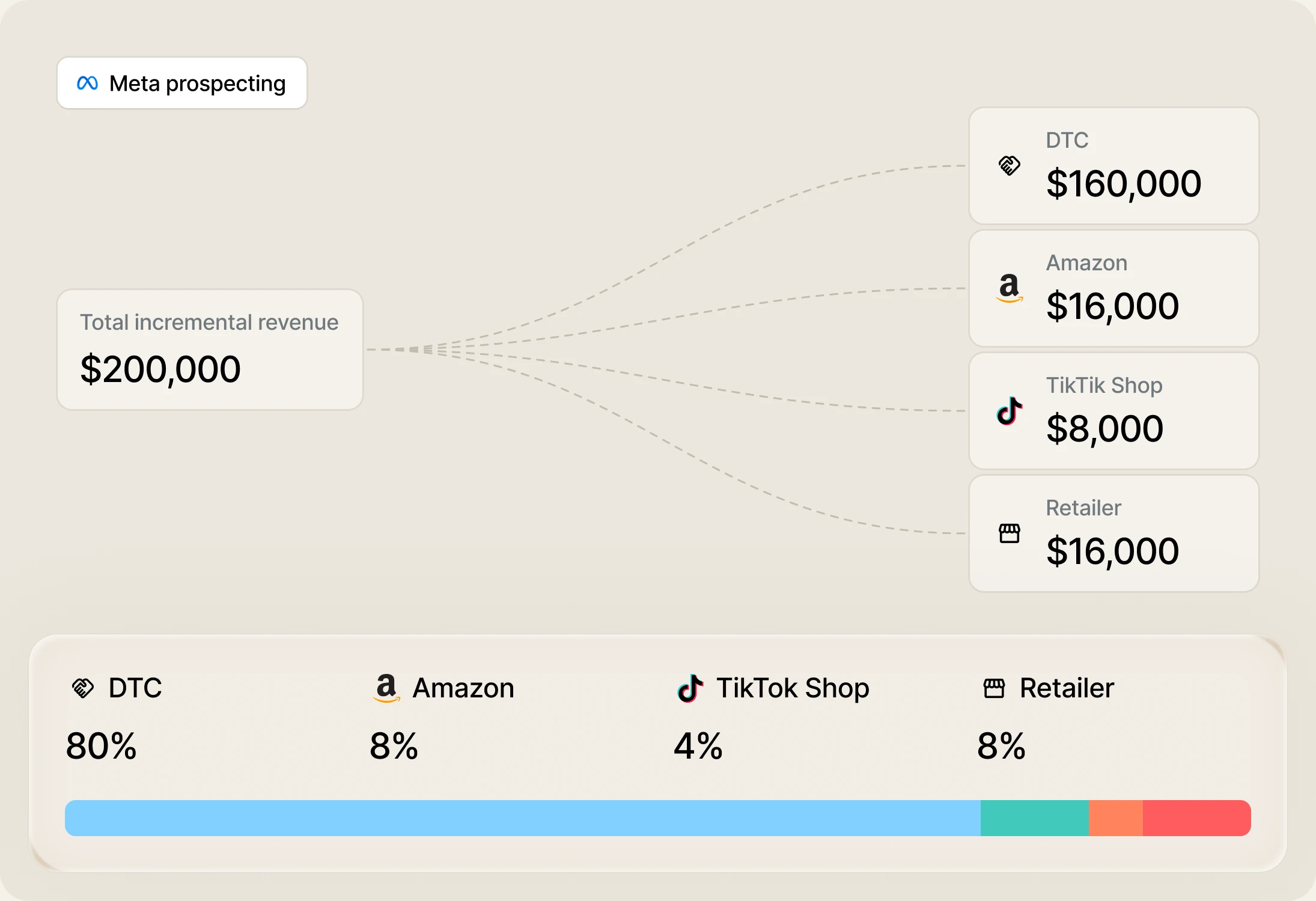
Measure contribution beyond your storefront.
Model the business you actually run. MMM shows where incremental revenue lands across connected sales channels, including marketplaces and offline retailers, so recommendations reflect a more complete view of impact.
Plan budget moves
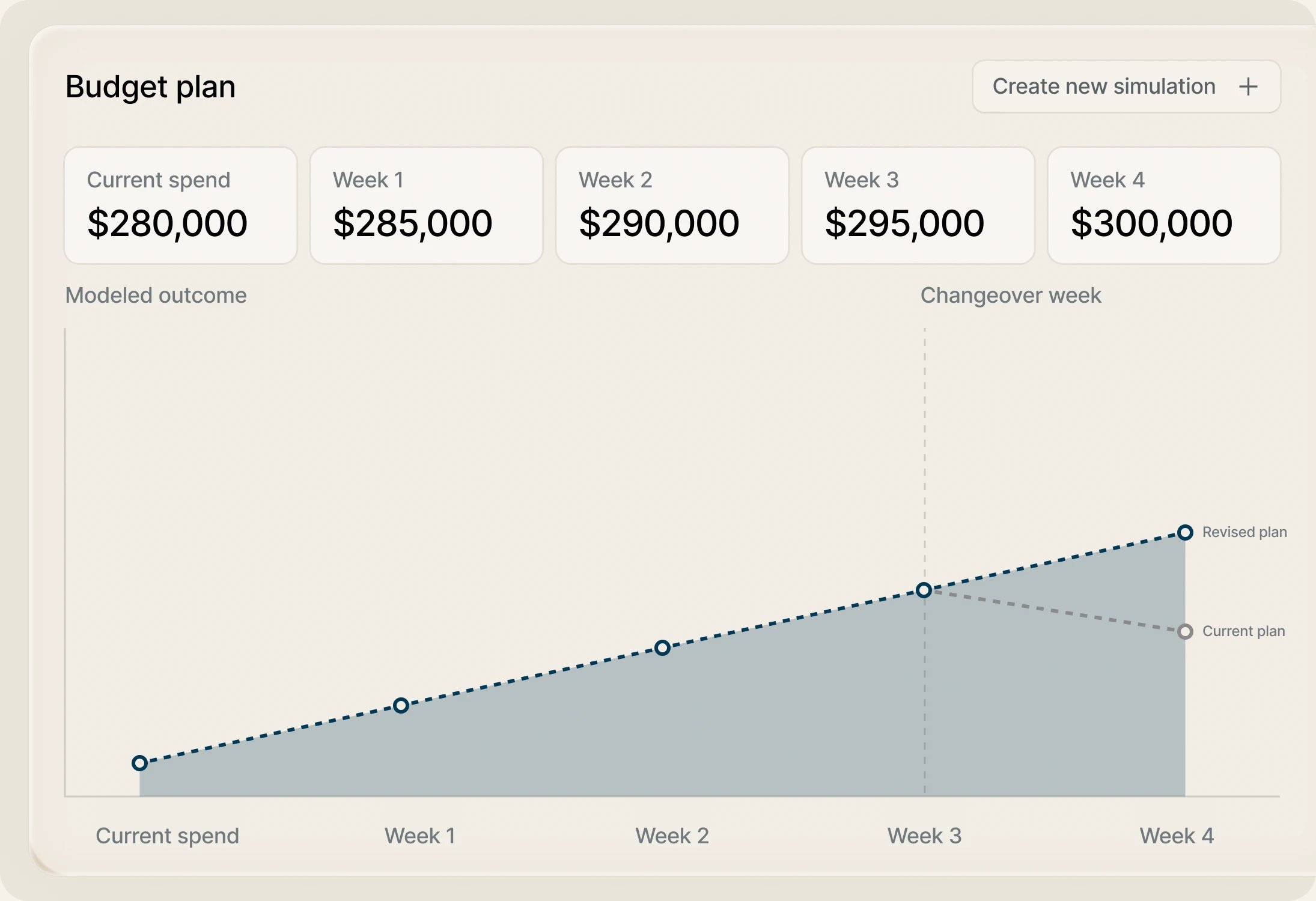
Model trade-offs before shifting spend.
Simulate a budget or channel mix change, spot diminishing returns, and forecast weeks ahead to understand how different investment decisions could impact revenue and efficiency without waiting for a static quarterly model.
Built for weekly decisions
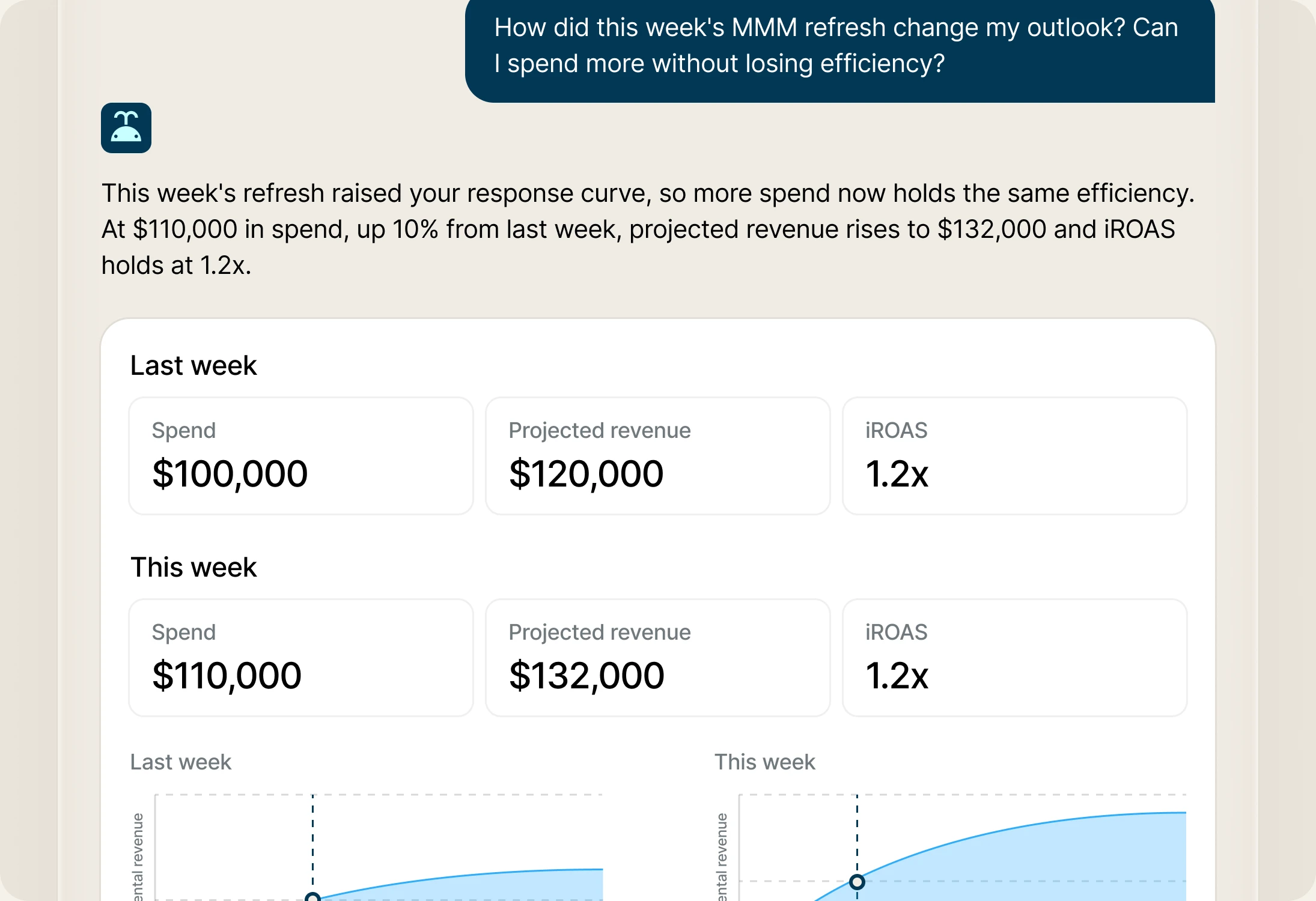
Bring recommendations into the next meeting.
MMM refreshes weekly to reflect changes in promotions, seasonality, and demand. Understand what changed, see the reasoning behind each recommendation, and allocate budgets based on the latest view of the business.
Always-on measurement system
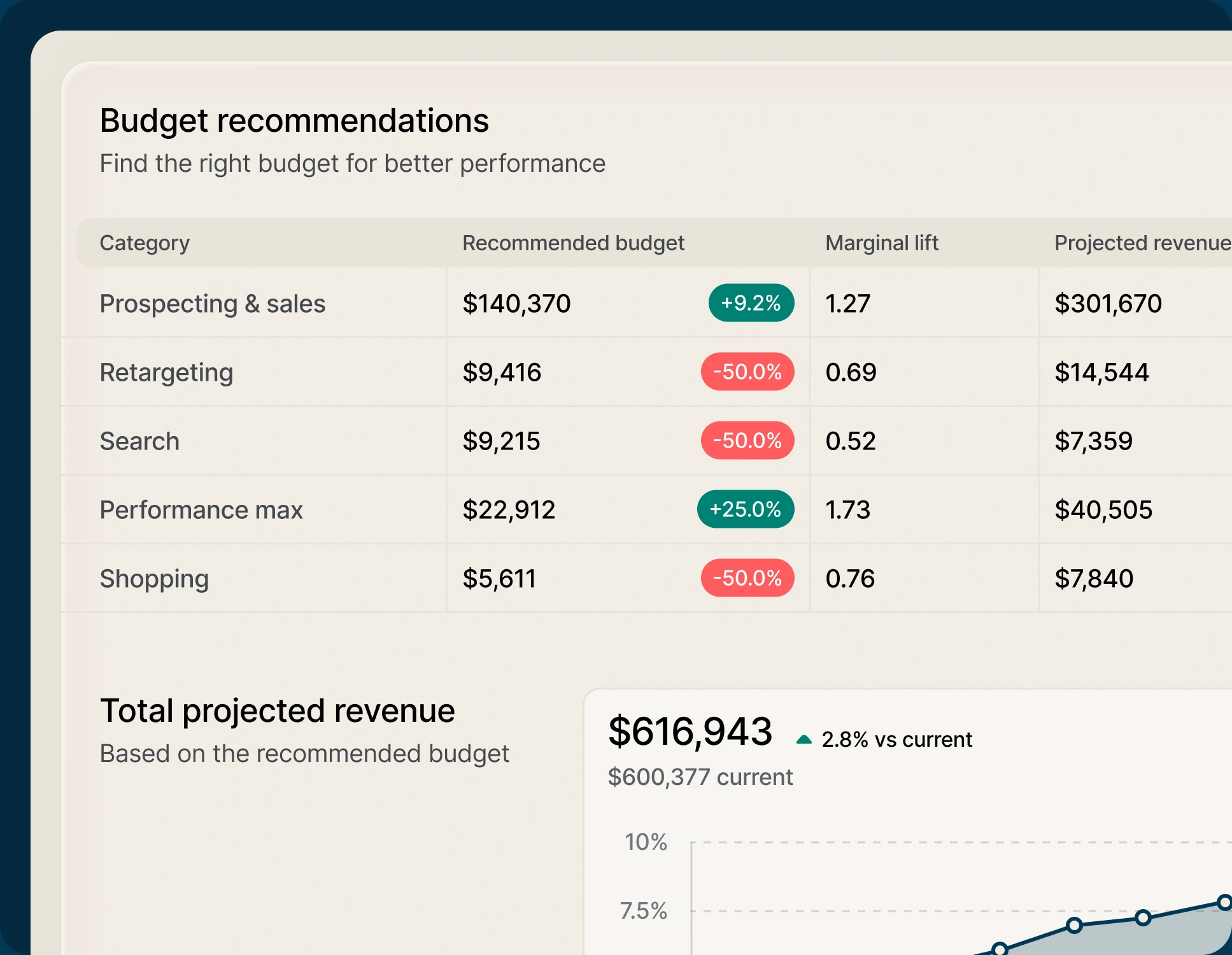
Budget decisions that hold up to the evidence.
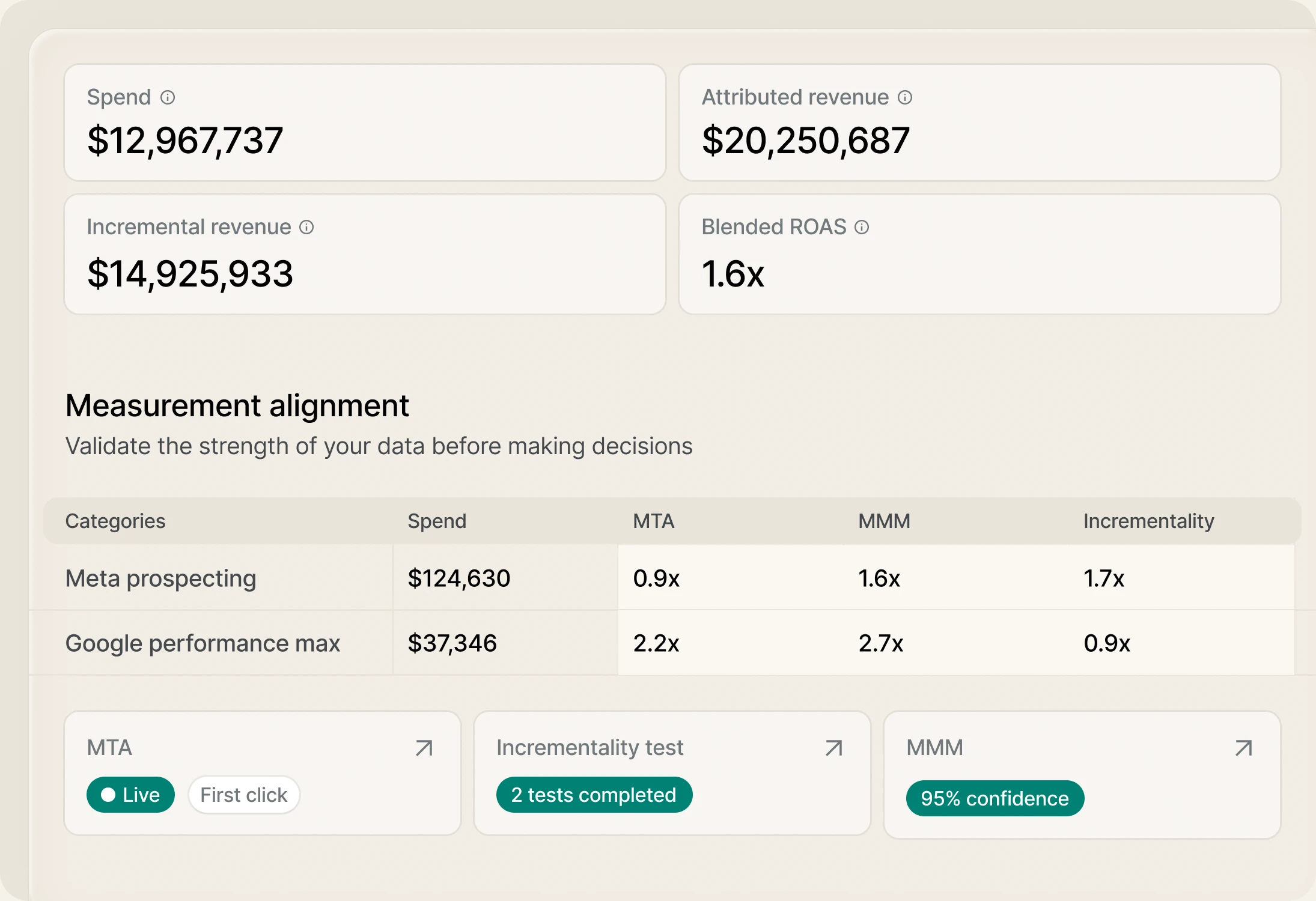
MMM unifies with attribution, incrementality, and Moby AI in Compass, connecting insights to answer any question for more confident marketing decisions.

“We use MMM like a weekly budgeting tool that helps us determine the most optimal spend across channels each week. It’s part of the puzzle, not an isolated exercise. Triple Whale’s MMM insights tell us the most efficient budget on a weekly basis, allowing us to be flexible in how we distribute it from market to market.”
Simona BittalovaPaid Media Manager

Frequently asked questions
What is marketing mix modeling (MMM)?
Marketing mix modeling, or MMM, uses historical sales, marketing spend, and other business factors to estimate how different channels contribute to revenue over time. Unlike attribution, MMM looks at aggregate patterns rather than individual customer journeys. It’s most useful for understanding the bigger picture across channels and deciding where to invest your budget.
When should I use MMM?
Use MMM when you’re deciding how to allocate budget across channels or trying to understand the impact of marketing that may not have a clear click path. Triple Whale’s MMM refreshes weekly, making it useful for ongoing budget planning. For daily campaign decisions, use attribution. And when you need to answer a specific question about whether marketing caused an outcome, use an incrementality test. All available in Compass.
What makes Triple Whale’s MMM different?
Triple Whale builds MMM using your connected commerce and marketing data, then brings channel contribution, model fit, diminishing returns, and budget scenarios into one workflow. Within Compass, you can align MMM with attribution and available incrementality evidence. Each method answers a different question, helping teams understand where the signals agree, where they differ, and what that means for investment decisions.
Does MMM account for seasonality or market fluctuations?
Yes. MMM can account for patterns and events that influence performance, including seasonality, pricing changes, promotions, launches, and other major business events when that data is available. Adding context around unusual periods, like an inventory disruption or major promotion, helps the model interpret what happened more accurately. You can also review model fit to understand how much confidence to place in channel estimates.
What data does Triple Whale’s MMM use?
MMM uses historical sales and order data along with marketing spend from the channels you want to measure. You can include connected ad platforms, custom or offline media, and additional context such as promotions, pricing changes, and major business events. More historical data and meaningful changes in spend generally give the model more information to learn from.
What types of brands is MMM best (or not best) for?
MMM is most useful for teams making meaningful budget decisions across multiple channels and with enough sales and spend history for the model to learn from. It can be especially valuable for brands investing in channels that clicks don’t fully capture or selling across DTC, marketplaces, and retail. If there’s limited history, very little change in spend, or channels always move together, our marketing data science team can help assess whether your data is ready for MMM.
How does Moby use MMM insights?
When Moby and Compass are available, Moby can use MMM alongside available attribution and incrementality context to explain performance, surface insights, and prepare recommendations. You can ask why measurement signals differ or which decision needs more evidence. Review the underlying signals and measurement evidence before acting on a spend change.
Why does MMM differ from my ad platforms and attribution?
Each measurement method looks at performance differently. Ad platforms use their own reporting rules. Attribution follows the customer journeys it can observe. MMM looks at broader patterns across revenue, spend, baseline demand, and other business factors to estimate contribution over time. That means the numbers won’t always match, and that doesn’t mean something is wrong. Differences can help you identify where signals disagree and where it’s worth looking more closely before changing budget.
How do I know whether an MMM recommendation is reliable?
Start with the model’s fit: compare its predictions with actual results, especially in the test period. Then check whether the model has enough sales history and variation in spend, and whether major promotions or other business events are accounted for. Where an eligible incrementality test exists, you can also see whether its result supports or conflicts with the MMM recommendation. If the fit is weak or the signals disagree, investigate before making a large budget change.
Can MMM show whether my ads drive sales on Amazon or at retailers?
Yes, when the sales data is connected, Retail Halo Effect can break out modeled incremental revenue by destination, such as Shopify, Amazon, TikTok Shop, or supported retail destinations. This helps teams assess channel contribution beyond a DTC storefront for a holistic model-based estimate, not a customer journey record or proof from a retail lift test.
Make your next budget move, faster.
I agree to the privacy policy including to Triple Whale using my contact details to contact me for marketing purposes.